Renin is also known as REN and angiotensinogenase, is a circulating enzyme that participates in the bodys reninangiotensin system (RAS), and plays an essential role in the elevation of arterial blood pressure and increased sodium retention by the kidney. Renin activates the reninangiotensin system by cleaving angiotensinogen, produced by the liver, to yield angiotensin I, which is further converted into angiotensin II by ACE, the angiotensinconverting enzyme primarily within the capillaries of the lungs. Renin is secreted from kidney cells, which are activated via signaling from the macula densa, which responds to the rate of fluid flow through the distal tubule, by decreases in renal perfusion pressure (through stretch receptors in the vascular wall), and by sympathetic nervous stimulation, mainly through beta1 receptor activation. Renin can bind to ATP6AP2, which results in a fourfold increase in the conversion of angiotensinogen to angiotensin I over that shown by soluble renin. In addition, renin binding results in phosphorylation of serine and tyrosine residues of ATP6AP2. The level of renin mRNA appears to be modulated by the binding of HADHB, HuR and CP1 to a regulatory region in the 3 UTR. An overactive reninangiotension system leads to vasoconstriction and retention of sodium and water. These effects lead to hypertension. Therefore, renin inhibitors can be used for the treatment of hypertension. - Proteine/Peptide
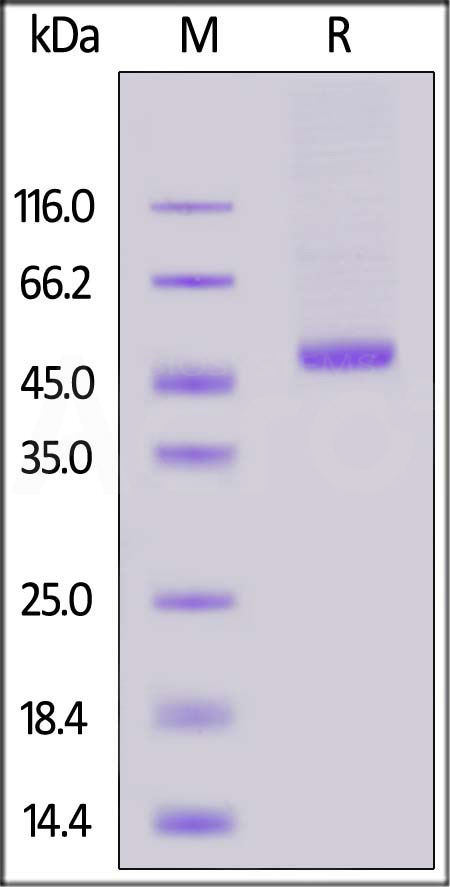
Human RENIN, His Tag on SDS-PAGE under reducing (R) condition. The gel was stained overnight with Coomassie Blue. The purity of the protein is greater than 95%.
* Mehrwertsteuer und Versandkosten nicht enthalten. Irrtümer und Preisänderungen vorbehalten