Purified polyclonal antibody supplied in PBS with 0.09% (W/V) sodium azide. This antibody is prepared by Saturated Ammonium Sulfate (SAS) precipitation followed by dialysis against PBS.
Target:
APOA1
Application Dilute:
WB: 1:1000, IHC-P: 1:10-50
orb37910
Western blot analysis of anti-APOA1 Antibody (N-term) in HepG2 cell line lysates (35 ug/lane). APOA1 (arrow) was detected using the purified Pab.
Western blot analysis of APOA1 (arrow) using rabbit polyclonal APOA1 Antibody (N-term). 293 cell lysates (2 ug/lane) either nontransfected (Lane 1) or transiently transfected (Lane 2) with the APOA1 gene.
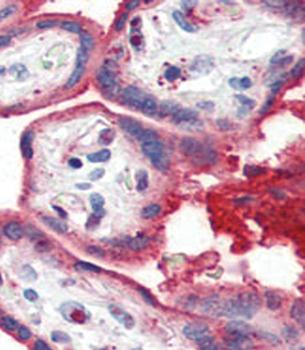
Formalin-fixed and paraffin-embedded human Placenta tissue reacted with APOA1 antibody (N-term), which was peroxidase-conjugated to the secondary antibody, followed by AEC staining. This data demonstrates the use of this antibody for immunohistochemistry, clinical relevance has not been evaluated.
Formalin-fixed and paraffin-embedded human Placenta tissue reacted with APOA1 antibody (N-term), which was peroxidase-conjugated to the secondary antibody, followed by AEC staining. This data demonstrates the use of this antibody for immunohistochemistry, clinical relevance has not been evaluated.
Formalin-fixed and paraffin-embedded human hepatocarcinoma tissue reacted with APOA1 antibody (N-term), which was peroxidase-conjugated to the secondary antibody, followed by DAB staining. This data demonstrates the use of this antibody for immunohistochemistry, clinical relevance has not been evaluated.
* VAT and and shipping costs not included. Errors and price changes excepted